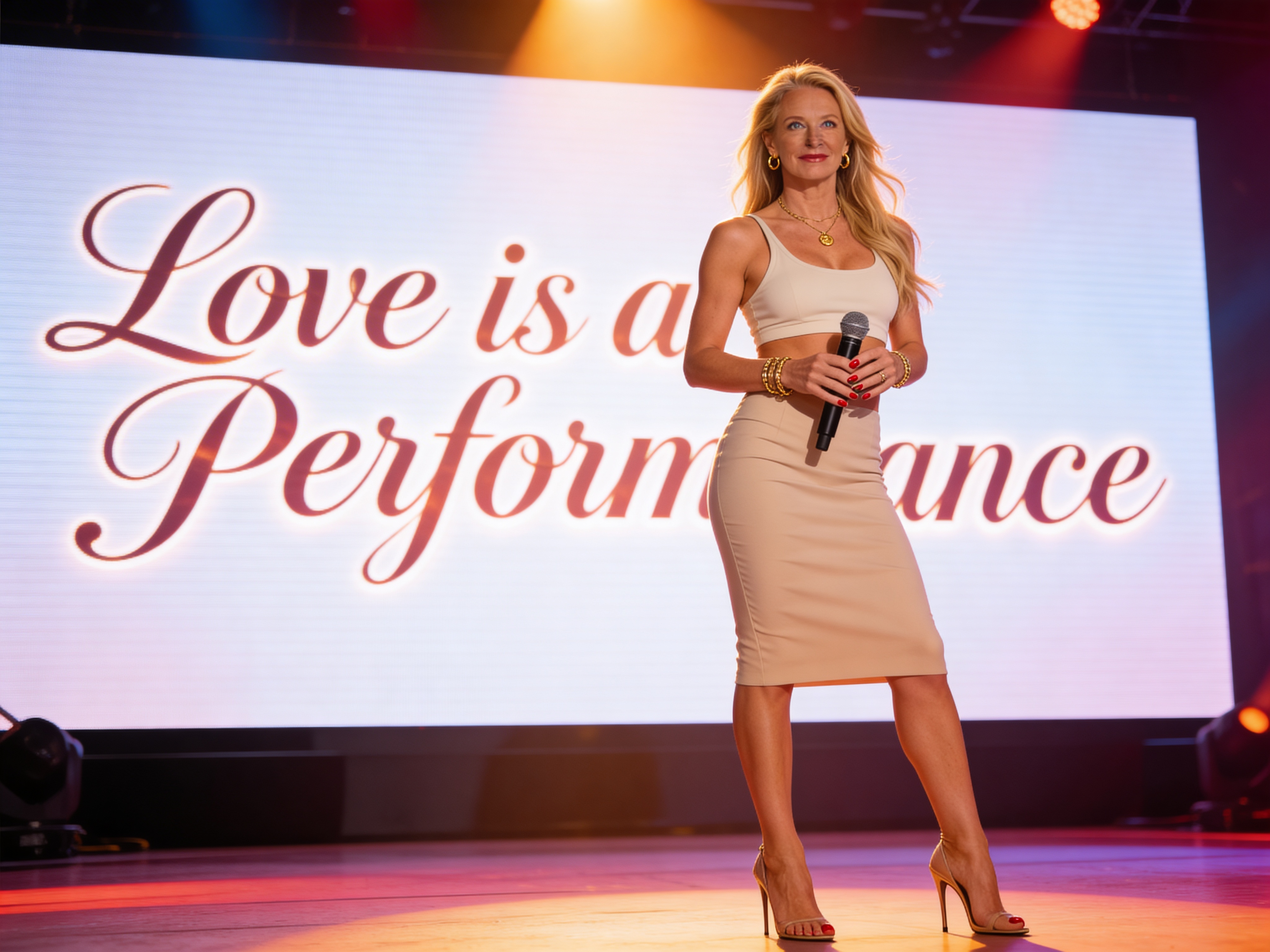
Love is a Performance
Love is a Performance
Love often feels like a private, spontaneous thing, but it can also be understood as a kind of performance. Not in the cynical sense that it’s fake, but in the practical sense that loving someone involves actions, signals, timing, and interpretation—and those elements are rooted in two brains that are, on average, wired differently. When you view love as a performance, you begin to see courtship, affection, conflict resolution, and everyday care as coordinated acts that both partners learn, rehearse, and adapt to. This perspective helps explain why relationships can be so beautiful and so complicated: each person is both actor and audience, improvising within the constraints of biology, culture, and personal history.
The performance starts in the brain. Men and women tend to process emotional information in different ways because of variations in brain structure, hormonal influences, and social conditioning. These differences are not absolute; they describe tendencies that shape how each person interprets cues and chooses responses. For example, some studies suggest that women often have greater connectivity between emotional and cognitive regions, which can make them more attuned to subtle social signals and more likely to integrate feelings into decision-making. Men, on average, may focus more on problem-solving pathways when responding to emotional situations. This does not mean one sex feels more deeply than the other, but it does mean they may express and prioritize love differently.
Thinking of love as a performance helps clarify everyday interactions. Courtship rituals—flirting, compliments, gift-giving, shared humor—are like opening acts that set expectations. These behaviors signal interest and establish roles: who leads, who follows, who sets the tone. Hormones such as dopamine and oxytocin play significant roles in these moments, providing the chemistry that makes the performance feel rewarding. Men and women may get different biochemical feedback from similar behaviors, leading them to repeat some acts and avoid others. Over time, couples develop a script: routines that work for them, responses that soothe, gestures that communicate commitment. When both partners understand and respect each other’s scripts, the performance feels effortless.
Misunderstandings happen when the scripts don’t match or when one partner’s cues are interpreted through the other’s neural and cultural lens. A man’s attempt to solve a problem may be perceived by his partner as emotional withdrawal. A woman’s need to talk through feelings may be read as criticism rather than connection. These mismatches are not failures of character so much as different performance styles. Recognizing this reduces blame: instead of accusing each other of being uncaring, partners can learn to translate. One person can adopt a supportive stance that includes listening without immediately fixing, and the other can practice expressing care through actions that feel tangible.
The ongoing maintenance of love is the long-term act of keeping the performance alive. Relationships require rehearsal: checking in, expressing appreciation, negotiating roles, and changing routines as life evolves. The brain’s plasticity means people can learn new ways of signaling affection and interpreting theirs partner’s behavior. With intentional practice, a partner can expand their repertoire—learning to offer reassurance in a way that suits the other, or to accept reassurance in a way that feels genuine. This adaptive work is part of the performance: improvising within a shared framework so the act stays authentic.
Power dynamics and cultural expectations also shape how the performance looks. Social scripts about gender influence which behaviors are learned early, from how affection is shown in family settings to what’s considered romantic in public. These cultural patterns interact with neurobiological tendencies, producing predictable but varied performances across different couples. Being aware of both influences allows partners to choose which parts of their inherited scripts to keep and which to rewrite for their relationship.
Viewing love as a performance elevates everyday acts. A small gesture—a hand on a back, a cup of coffee, a well-timed joke—becomes meaningful because it’s part of a larger pattern of signaling and receiving. It also empowers partners: if love is partly made of learned behaviors, then it can be improved by attention and practice. Couples can consciously design rituals that bridge their differences, using empathy as stage direction and communication as rehearsal time.
In the end, calling love a performance is not to reduce it to artifice but to highlight its active, negotiated nature. It acknowledges that two different brains meet and must find a shared language of gestures, words, and habits. When partners treat love as a collaborative performance—one where both are invited to refine their roles and listen to each other’s cues—the relationship becomes a living work: imperfect, adaptive, and deeply rewarding. The performance of love, like any meaningful art, improves with practice, patience, and the willingness to show up.
For more visit : HERE